Introduction
Decorating a cake with shimmer or sparkle transforms it from ordinary to unforgettable. But grabbing the wrong jar can ruin your masterpiece—or worse, make it unsafe to eat. Edible luster dust and edible glitter look similar on the shelf yet behave very differently on a dessert. This guide breaks down exactly what separates these two products so you choose the right one every single time.
What Is Edible Luster Dust?
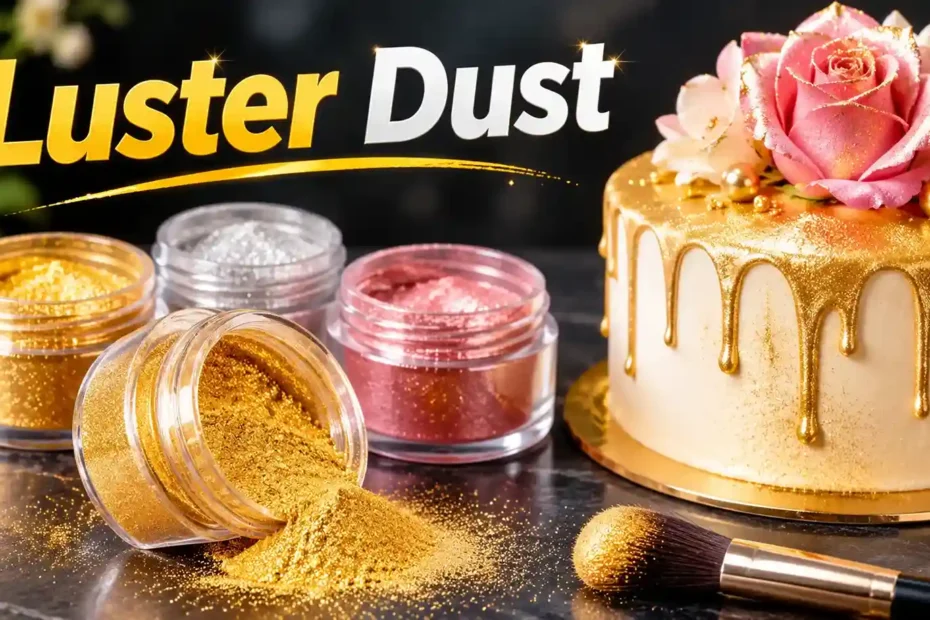
Edible luster dust is a finely milled powder that creates a smooth, pearlescent, or metallic sheen on food surfaces. It is typically made from mica-based pigments combined with FDA-approved food colors. The particles are microscopic, allowing the dust to blend seamlessly into fondant, chocolate, and gum paste.
Bakers reach for luster dust when they want elegance rather than flash. A light brush stroke across a molded rose or a painted gold accent on a wedding cake demonstrates its true purpose: refined, understated shine.
What Is Edible Glitter?
Edible glitter delivers visible, light-catching sparkle. It shares the same mica-based foundation as luster dust, but the particles are significantly larger—often in the 150 to 250 micron range. These larger flakes reflect light dramatically, creating the twinkling effect associated with celebration cakes and festive cookies.
Unlike luster dust edible glitter cannot be painted or dissolved into a liquid. It must stay dry to function properly. Sprinkling or spraying it onto a slightly tacky surface is the only way to make it adhere.
The Core Difference: Particle Size and Purpose
The single most important distinction between these two products comes down to particle size. Luster dust is a powder; edible glitter is a flake. That physical difference dictates everything about how each product performs.
Luster dust is designed for coverage and sheen. It disappears into a surface, leaving behind a metallic glow. Edible glitter is designed for visibility. It sits on top of a surface and announces itself with sparkle. Choosing between them is not about which is “better”—it is about which effect matches your vision.
Visual Comparison: Sheen vs. Sparkle
| Feature | Edible Luster Dust | Edible Glitter |
| Particle Size | Fine powder (microscopic) | Larger flakes (150–250 microns) |
| Finish | Pearlescent, metallic, satin | Sparkly, reflective, twinkling |
| Visibility | Subtle, blended shimmer | Bold, visible sparkle |
| Best For | Fondant, gum paste, chocolate details | Buttercream, cookies, cupcakes |
| Application | Dry brush or wet paint | Dry sprinkle or spray |
How to Apply Luster Dust Correctly
Luster dust offers two primary application methods, and each produces a distinct result.
Dry brushing works best on firm surfaces like fondant, modeling chocolate, or set gum paste. Dip a soft food-safe brush into the powder, tap off the excess, and gently sweep it across the surface. This technique highlights raised details and creates soft gradients.
Wet painting transforms luster dust into a metallic paint. Mix a small amount with a clear food-grade alcohol such as vodka or rose spirit until it reaches a paint-like consistency. Use a fine brush to apply lettering, borders, or intricate designs. The alcohol evaporates quickly, leaving only the metallic pigment behind.
Never mix luster dust into buttercream if you want shine. The fat particles suspend the mica and prevent light reflection, resulting in color without luster.
How to Apply Edible Glitter Correctly
Edible glitter requires a tacky surface to stick. Timing is everything.
On buttercream, sprinkle glitter immediately after piping while the surface is still moist. On royal icing cookies, wait until the icing has just crusted over—about ten to fifteen minutes after flooding—then apply. For chocolate-dipped treats, add glitter while the chocolate is still wet so it locks into place as it sets.
A dry pump sprayer distributes glitter evenly across large surfaces without clumping. For precise placement, use a small spoon or a clean dry brush to flick glitter onto specific areas.
The Safety Rule Every Baker Must Follow
Not everything that shimmers is safe to eat. The FDA has issued explicit warnings about decorative products marketed for food use that are not actually edible.
Check the label for three things: a complete ingredient list, a lot number, and an expiration date. If a product says only “non-toxic” or “for decorative use only,” it is not food-grade and must never touch a surface you plan to eat.
Common edible ingredients include mica-based pearlescent pigments, sugar, acacia gum, maltodextrin, and FD&C colors. Products lacking these disclosures are craft supplies, not food ingredients.
Common Mistakes That Ruin the Effect
Using glitter where dust belongs. Painting with edible glitter produces a clumpy, uneven mess. Glitter stays dry.
Using dust where glitter belongs. Brushing luster dust over buttercream yields almost no visible shimmer. The surface needs to be smooth and firm.
Applying glitter to a dry surface. Without tack, glitter rolls off. Wait for the right window of moisture.
Assuming “edible” based on packaging imagery. A cake on the label does not make the contents food-safe. The ingredient list is the only reliable indicator.
When to Choose Luster Dust
Select luster dust when your design calls for sophistication and control. Metallic accents on fondant, painted gold lettering, pearlescent finishes on molded flowers, and subtle highlights on sculpted figures all demand the precision that only a fine powder can deliver. Luster dust gives you the power to paint, brush, and blend with the same control you would have with any artist’s medium.
When to Choose Edible Glitter
Choose edible glitter when you want the dessert to announce itself. Birthday cupcakes, holiday cookies, celebration cakes, and anything destined for a photo need that unmistakable twinkle. Glitter delivers instant visual impact with minimal effort—a quick sprinkle transforms a plain buttercream swirl into a festive centerpiece.
Storage and Shelf Life
Both products demand protection from moisture. Store luster dust and edible glitter in tightly sealed containers away from heat, steam, and direct sunlight. Humidity causes clumping and can ruin the texture of either product.
Properly stored, edible luster dust and edible glitter maintain quality for months. Label opening dates if you buy in bulk. Discard any product that shows signs of moisture damage or color fading.
Building Your Decorating Toolkit
A well-equipped baker keeps both products on handThey rarely replace one another and have distinct functions. Start with a basic gold and silver luster dust for metallic accents, plus a white or iridescent glitter for celebration sparkle. Expand your collection as your designs grow more ambitious.
Invest in quality brushes dedicated to dry application. A soft, wide brush for luster dust and a small stiff brush for precise glitter placement make a noticeable difference in the finished result.
Frequently Asked Questions
Can I use luster dust as a substitute for edible glitter?
No. Luster dust is too fine to create visible sparkle. It will add color and sheen but not the twinkling effect that defines edible glitter.
Is edible glitter safe for children’s cakes?
Yes, when the product is genuinely edible and properly labeled. Check for a full ingredient list and expiration date. The particle size of edible glitter is not considered a choking hazard for standard decorating use.
Can I mix luster dust into buttercream for a metallic frosting?
You can, but it will not shine. The fat in buttercream prevents the mica particles from reflecting light. Use piping gel as a clear medium if you want metallic piping.
How do I make edible glitter stick to a dry cake surface?
Brush a small amount of clear extract or water onto the specific area, then apply glitter immediately. The moisture acts as glue.
Are all luster dusts edible?
No. Some luster dusts are sold for decorative purposes only and contain non-food-safe ingredients. Always verify the label includes a full ingredient list, lot number, and expiration date.
What is disco dust, and is it edible?
Disco dust is a larger-particle decorative product often confused with edible glitter. Most disco dust is not food-grade and should be removed before eating. Treat it as decoration, not food.
Final Thoughts: Choose with Confidence, Decorate with Pride
Your desserts deserve the right finish. Luster dust gives you painterly control and refined metallic sheen. Edible glitter gives you instant celebration and light-catching sparkle. Knowing which to reach for—and verifying that what you grab is genuinely safe—elevates your craft from home baking to professional results. Check every label, trust the ingredient list over the packaging, and let your next creation shine for exactly the right reason.